
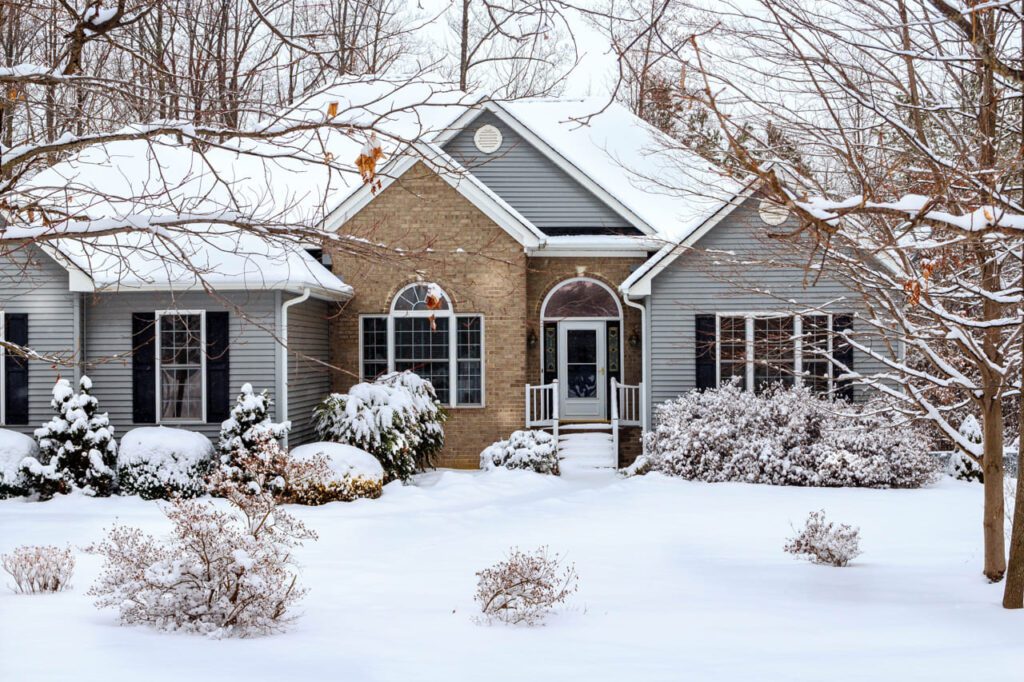
When temperatures drop into the single digits across Lancaster County, and your house can’t get above 62 degrees, the question hits fast: is your furnace failing, or was it never capable of handling this in the first place? These feel like the same problem, but they’re not, and treating them the same way leads to expensive mistakes. Replacing a perfectly functional furnace that’s simply undersized wastes thousands of dollars. Patching a failing furnace that genuinely needs replacement costs you in repair bills, energy waste, and cold nights that wear on your family’s patience and comfort.
This post walks you through exactly how to tell the difference, what Pennsylvania winters specifically demand from your heating system, and how to make a confident decision instead of an expensive guess.
Why Pennsylvania Winters Expose Furnace Problems Other Seasons Hide
Lancaster County winters aren’t brutal by northern standards, but they’re genuinely demanding. Temperatures regularly drop below 20 degrees during January cold snaps. Extended periods below freezing stress heating systems in ways that mild weather simply doesn’t reveal.
A furnace that performs adequately in 35-degree weather can fail completely at 10 degrees. This isn’t necessarily because the furnace broke. It might mean the system was always marginal for your home’s heating load and mild winters masked the problem for years.
According to the U.S. Department of Energy, heating accounts for 29 percent of the average home’s energy bill. When your system works harder than it should to maintain temperature, that percentage climbs. Understanding why your furnace struggles in extreme cold helps you fix the actual problem rather than the visible symptom.
The Real Difference Between a Failing Furnace and an Undersized One
This distinction matters more than most homeowners realize. Getting it wrong means either replacing equipment that didn’t need replacing or repairing equipment that will never solve your comfort problem.
Signs Your Furnace Is Actually Failing
A failing furnace shows specific symptoms that don’t always match outdoor temperature extremes.
Watch for these indicators:
Unusual sounds during operation:
Banging, rattling, screeching, or rumbling that wasn’t present before signals mechanical problems. A crack in a heat exchanger produces a distinctive bang as the metal expands. Blower motor bearing failure creates grinding or screeching.
Short cycling:
The furnace starts, runs briefly, shuts off, then restarts repeatedly without reaching target temperature. This indicates a safety sensor triggered a shutdown, often due to overheating caused by a dirty filter, a blocked flue, or a cracked heat exchanger.
Visible flame problems in gas furnaces:
A healthy burner flame burns blue with a small yellow tip. Yellow or orange flames indicate combustion problems that affect efficiency and raise carbon monoxide concerns.
Rising gas or electric bills without usage changes:
If your energy costs climb significantly while your habits stay the same, a loss of efficiency due to mechanical deterioration is often responsible.
Age beyond 15 years with no recent service:
Furnaces maintained annually can last up to 20 years. Unmaintained furnaces in Lancaster County’s dusty older homes often develop serious problems at 12 to 15 years.
Frequent repairs in recent years:
One repair every several years is normal maintenance. Multiple repairs in a single season signal a system nearing the end of its life.
Signs Your Furnace Is Undersized
An undersized furnace behaves differently. It typically runs constantly during cold snaps without reaching your thermostat setpoint. The system isn’t broken. It’s just working at full capacity and still falling short of what your home demands.
Common undersizing situations in Lancaster County include:
Additions built after original system installation:
A furnace sized for 1,800 square feet in 1995 may now heat 2,400 square feet after additions. Nobody resized the equipment.
Insulation improvements that changed heat loss calculations:
Counterintuitively, some homeowners who improve attic insulation in older homes without addressing air sealing change airflow patterns that affect system performance.
Original installation errors:
Many Lancaster County homes have furnaces installed using rules of thumb rather than proper load calculations. These systems work adequately in mild weather but fail during extreme conditions.
Converted spaces now requiring heat:
Finished basements, converted garages, or enclosed porches added to a home’s conditioned space without corresponding heating capacity upgrades.
The critical test: does your furnace run almost constantly during cold snaps but the house still feels cold, or does it cycle normally but produce inadequate heat? Constant running with inadequate heat typically indicates undersizing. Normal cycling with inadequate heat typically indicates mechanical failure.
What Proper Furnace Sizing Actually Means for Lancaster County Homes
Furnace sizing isn’t about square footage alone, though many contractors still approach it that way. Proper sizing requires what HVAC professionals call a Manual J load calculation, an analysis that accounts for your specific home’s characteristics.
Lancaster County’s diverse housing stock makes this calculation especially important. A 2,000-square-foot Victorian row home on East Orange Street has completely different heating requirements than a 2,000-square-foot ranch built in 1975 in Manheim Township. The Victorian has higher ceilings, older windows, significant air infiltration, and limited insulation. The ranch has lower ceilings, better windows, and improved insulation. Installing the same furnace in both homes would mean that one is oversized and the other is undersized.
According to the Air Conditioning Contractors of America, oversized furnaces create as many problems as undersized ones. An oversized furnace heats a space quickly, then shuts off before it can properly distribute heat throughout the home. The result is temperature swings, poor humidity control, excessive wear from frequent cycling, and carbon monoxide risks from incomplete combustion during short cycles.
A furnace sized correctly for your home’s actual heat load runs longer, more consistent cycles that distribute heat evenly, control humidity appropriately, and use fuel efficiently. If your installer never mentioned Manual J calculations, proper sizing may never have happened.
When Lancaster County Cold Snaps Reveal the Truth
January and February cold snaps in Central Pennsylvania are an honest test of your heating system’s real capacity. When temperatures drop to 5 or 10 degrees overnight, your furnace faces what HVAC engineers call design conditions, the extreme temperatures the system should handle while maintaining comfortable indoor temperatures.
A properly sized, well-maintained furnace handles design conditions by running near constantly. That’s normal and expected. The furnace should maintain 68 to 70 degrees indoors when outdoor temperatures hit the extremes Lancaster County regularly sees.
A failing furnace may handle mild days fine but develop symptoms during prolonged cold: short-cycling from overheating safety switches, pressure-switch failures from exhaust-system problems, or ignition failures from components stressed by extended operation.
An undersized furnace simply can’t close the gap between extreme outdoor cold and your target indoor temperature, no matter how well it functions mechanically.
The distinction: a failing furnace shows symptoms like unusual behavior, error codes, or intermittent operation. An undersized furnace runs perfectly but can’t produce enough heat.
The Cost of Getting This Wrong
Misdiagnosing your furnace problem costs you in ways that compound over time.
If you replace a furnace that was actually undersized for your home’s load, you might end up with another undersized unit if the replacement is sized the same as the original. The problem returns with the new equipment. Or you buy an oversized unit that creates comfort problems and wears out faster from short cycling.
If you repair a furnace that’s genuinely failing, you pay repair costs now and replacement costs soon anyway, having spent repair money on a system that needed replacement. You also risk the failure happening at the worst possible time, a January weekend when emergency service costs run significantly higher than planned replacement.
Beyond money, there’s the comfort and safety dimension. A cracked heat exchanger in a failing furnace can introduce carbon monoxide into living spaces. Lancaster County’s older homes, with their original ductwork and limited fresh-air infiltration, create conditions in which this risk warrants serious attention.
Living through multiple Pennsylvania winters with inadequate heat affects more than comfort. It affects sleep, work productivity, and your family’s well-being during the months when your home should feel like genuine refuge from the cold outside.
Your Three-Step Path to a Confident Answer
You don’t have to guess whether your furnace is failing or simply the wrong size for your home. A clear path leads to a definitive answer.
Step 1:
Document What You’re Actually Experiencing
Before calling anyone, write down exactly what your furnace does during cold periods. Does it run constantly? Does it cycle on and off rapidly? Does it make unusual sounds? Does it reach your thermostat setpoint during mild weather but not during cold snaps? These specific observations help a technician diagnose accurately rather than guess. Note your furnace’s age, when it last received service, and any recent repairs.
Step 2:
Schedule a Diagnostic Assessment, Not Just a Service Call
Request a diagnostic evaluation to determine whether your furnace is mechanically sound and appropriately sized for your home. A thorough assessment includes combustion analysis to check burner efficiency and heat exchanger integrity, airflow measurement to verify the system moves enough air, static pressure testing to identify duct restrictions, and a basic load calculation to compare your furnace’s output with your home’s heating needs. This gives you facts, not opinions.
Step 3:
Get Honest Recommendations Before Committing to Anything
After the assessment, you should receive a clear explanation of what’s actually wrong, whether that’s mechanical failure, sizing problems, duct issues, or some combination. You deserve to understand what a repair would accomplish if possible, what a replacement would accomplish, and how the costs of each option compare over a realistic timeframe. An honest assessment serves your interests, not a contractor’s preference for the higher-margin option.
What Comfortable Pennsylvania Winters Actually Feel Like
Imagine next January’s cold snap hitting Lancaster County and your home holding 70 degrees without effort. Your furnace runs its normal cycles, the heat distributes evenly from room to room, and you stop thinking about your heating system because it simply works.
You stop waking up to cold bedrooms. You stop piling blankets on the bed in January. You stop watching the thermostat anxiously during cold snaps, wondering if tonight is the night the system gives up. You stop debating whether to finally replace the furnace because the answer is clear: the system you have is the right one for your home.
That’s what a correctly sized, properly functioning furnace in a Lancaster County home actually delivers. Not just adequate heat but confident comfort through whatever Pennsylvania winter brings.
Get Your Answer Before Next Winter Arrives
The worst time to discover your furnace is failing or undersized is January at 6 AM when the house is 55 degrees, and your family is awake and cold. You deserve better than that.
After nearly four decades serving Lancaster County homes through Pennsylvania winters, Groff’s Home Comfort Team has diagnosed this exact question hundreds of times. Failing or undersized. Repair or replace. The answer matters, and you deserve it delivered honestly based on what your specific home and system actually need.
Contact Groff’s Home Comfort Team at (717) 455-3478 to schedule a diagnostic assessment before cold weather arrives.
Visit our HVAC services page to learn how we approach furnace evaluation in Lancaster County’s diverse housing stock.
Schedule your assessment today and head into winter with a real answer, not a worried guess.
Frequently Asked Questions
How do I know if my furnace is failing or just too small for my house?
A failing furnace typically shows behavioral symptoms: unusual sounds like banging or screeching, short-cycling, where it starts and stops frequently without reaching the set temperature, yellow or orange burner flames instead of blue, rising energy bills without usage changes, or error codes on modern systems. An undersized furnace usually runs properly but can’t close the gap between the cold outdoors and your target indoor temperature, especially during Pennsylvania cold snaps. The key diagnostic question is: does your furnace behave abnormally, suggesting mechanical problems, or does it run constantly and properly but still leave the house cold, suggesting inadequate capacity?
What temperature should my furnace maintain during a Pennsylvania cold snap?
A properly sized, well-maintained furnace should maintain your thermostat setpoint of 68 to 70 degrees indoors when outdoor temperatures reach Lancaster County’s design conditions, typically around 10 to 14 degrees Fahrenheit. During these extreme periods, your furnace will run almost continuously, which is normal. If your system can’t reach your setpoint during extended cold even while running constantly, you likely have an undersizing problem. If your system reaches temperature during mild weather but fails to do so during cold snaps, you may have either a marginal sizing situation or a mechanical issue that worsens under extended operation.
How is furnace sizing calculated for a Lancaster County home?
Proper furnace sizing requires a Manual J load calculation that accounts for your home’s specific characteristics: square footage, ceiling heights, window area and quality, insulation levels, air infiltration, local climate data, and heat loss through walls and floors. Lancaster County’s diverse housing stock makes this calculation especially important. A 2,000-square-foot Victorian home has dramatically different heating requirements than a 2,000-square-foot ranch, even at the same outdoor temperature. Many furnaces in Lancaster County were sized using rules of thumb rather than proper calculations, resulting in systems that work adequately in mild weather but fail during extreme temperatures. The Air Conditioning Contractors of America’s Manual J standard provides the framework for accurate sizing.
Is it worth repairing a furnace that’s more than 15 years old in Pennsylvania?
The decision depends on repair cost relative to replacement cost and the furnace’s overall condition. A general guideline: if repair cost exceeds 50 percent of replacement cost, replacement usually makes more financial sense. For furnaces more than 15 years old, the calculus changes. Older systems have used up most of their service life, so additional failures become more likely even after a successful repair. Modern high-efficiency furnaces operating at 96 percent AFUE replace older systems running at 70 to 80 percent efficiency, generating energy savings that offset replacement cost over time. Get a diagnostic assessment that honestly evaluates the mechanical condition before you commit to repair or replacement.
Why does my furnace work fine in October but struggle in January?
Your furnace’s capacity relative to your home’s heating demand changes with outdoor temperature. During mild fall weather, a furnace that’s slightly undersized or mechanically marginal performs adequately because the gap between outdoor and indoor temperatures is modest. During January cold snaps, the gap widens dramatically. An undersized furnace that could heat your home from 35 degrees to 70 degrees can’t heat it from 10 degrees to 70 degrees. A mechanically marginal furnace that operates adequately during short cycles in mild weather develops problems during the extended continuous operation that extreme cold demands. This is why Pennsylvania cold snaps serve as honest assessments of system capacity and health.
What are the signs that I need a new furnace rather than a repair?
Several indicators justify replacement over repair. A system over 15 years old with multiple recent repairs suggests end-of-life decline. A cracked heat exchanger requires replacement, as it cannot be safely repaired and poses a carbon monoxide risk. Repair cost exceeding half the replacement cost argues for replacement. Consistent inability to maintain comfortable temperatures even during service calls and parts replacement suggests fundamental sizing or system problems that repairs won’t resolve. Rising energy bills despite maintenance indicate declining efficiency that a new high-efficiency system would reverse. Groff’s Home Comfort Team provides honest assessments that recommend repair when repair genuinely serves your interests and replacement only when it’s actually justified.
How much does a properly sized furnace replacement cost in Lancaster County, PA?
Furnace replacement costs in Lancaster County vary based on equipment efficiency, system size, and installation complexity. Standard efficiency gas furnaces (80 percent AFUE) with straightforward installation typically range from $2,500 to $4,500 installed. High-efficiency condensing furnaces (96 percent AFUE) typically cost $3,500 to $6,500 installed, depending on size and venting requirements. Homes requiring duct modifications, new venting systems, or complex installations tend to fall toward the higher end. The U.S. Department of Energy estimates that upgrading from an 80 percent to a 96 percent efficiency furnace reduces heating costs by 16 percent annually, which compounds meaningfully over a system’s 15 to 20-year lifespan. Get multiple quotes and make sure each quote specifies the same equipment and scope of work for an accurate comparison.
About the Author: Andrew Whittaker
Andrew Whittaker, co-owner of Groff’s Home Comfort Team, brings over a decade of dedicated leadership to one of Lancaster County’s most trusted home service companies. Since joining the team more than 10 years ago, Andrew has been instrumental in maintaining Groff’s reputation for quality craftsmanship, honest advice, and innovative solutions. With a mechanical engineering background and a passion for customer care, Andrew ensures every project meets the high standards that have defined Groff’s since 1987.
Andrew’s commitment to ongoing education and technical excellence keeps Groff’s at the forefront of home comfort technology. His hands-on approach and attention to detail ensure that every HVAC, plumbing, electrical, and water treatment project receives the expertise Lancaster County homeowners deserve, backed by our 100% satisfaction guarantee.
Beyond his professional achievements, Andrew is deeply invested in the Lancaster community. He supports local initiatives and fosters a company culture that values generosity, purpose, and lasting relationships. Under his leadership, Groff’s not only delivers exceptional home comfort solutions but also serves as a trusted neighbor dedicated to enhancing the comfort and safety of every home.
