
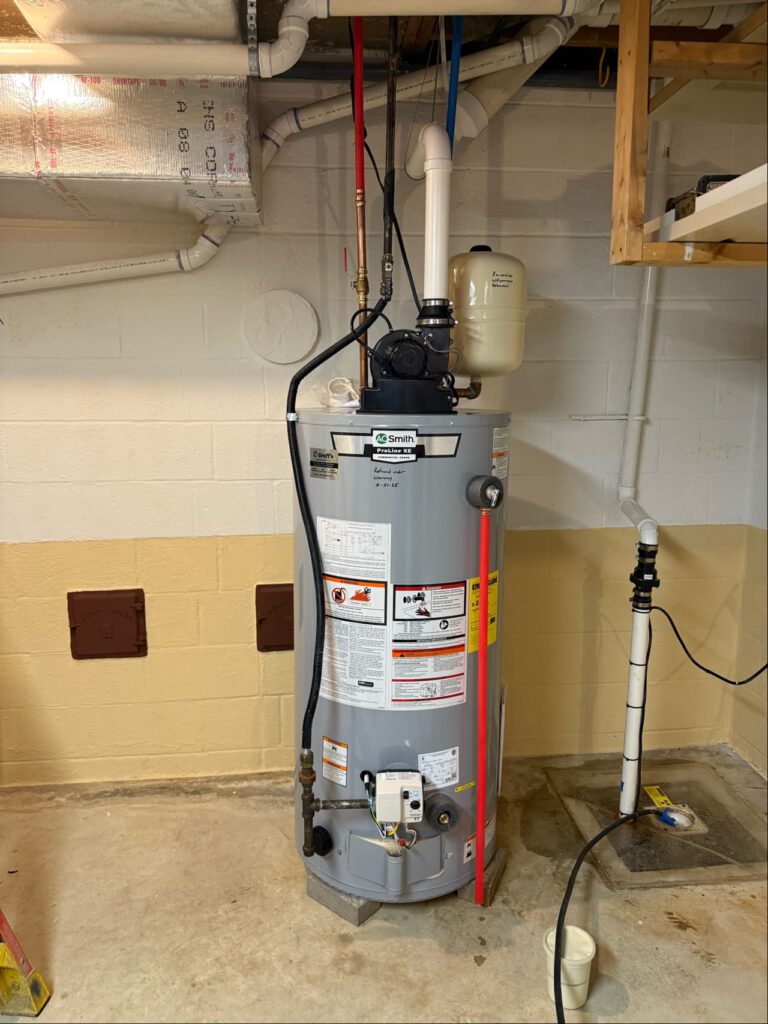
Your water heater manual says 10 to 12 years. Your neighbor says his lasted 15. Your plumber says yours is already living on borrowed time at 8. Everyone gives you a different answer, and you’re left wondering whether to budget for a replacement now or wait until cold showers make the decision for you.
Here’s what nobody tells you: water heater lifespan isn’t a universal number. It depends heavily on where you live, what runs through your pipes, and how well you maintain the unit. In Central Pennsylvania, and Lancaster County specifically, local water conditions create challenges that manufacturers don’t account for when they print that 10- to 12-year estimate on the box. Understanding what actually shortens water heater life in our region helps you make smarter decisions, avoid emergency replacements, and stop paying more than you should for hot water every month.
What Manufacturers Promise vs. What Central Pennsylvania Delivers
Every major water heater brand publishes an expected lifespan based on controlled testing conditions. Standard tank water heaters carry 6 year warranties. Tankless units promise up to 15 years. These numbers assume average water quality, average usage, and average maintenance. Central Pennsylvania offers none of those averages.
The Hard Water Problem Hiding Inside Your Tank
Lancaster County draws water from limestone aquifer systems. Limestone geology produces naturally hard water with high mineral content, primarily calcium and magnesium. These minerals don’t harm you. They destroy water heaters.
According to the Water Quality Association, hard water causes scale buildup inside tank water heaters, dramatically accelerating wear. Every time your water heater heats water, minerals precipitate from solution and settle on the heating elements and the tank floor. This layer of scale acts as an insulator, forcing your unit to work harder and longer to heat the same volume of water.
The practical result in Central Pennsylvania homes:
- Gas water heaters rated for 10 to 12 years often fail between 7 and 9 years.
- Electric water heaters with manufacturer-estimated 10-year lifespans frequently need replacement at 6 to 8 years.
- Tankless units promised to last 15-20 years, require more frequent descaling service, and can develop heat exchanger failures in 12 to 15 years without proper water treatment.
Scale buildup also drives up your energy bills before the unit fails entirely. A half-inch of scale forces a water heater to consume up to 70% more energy to maintain the temperature. You pay that cost on every utility bill, month after month, while the unit quietly deteriorates.
Cold Ground Water Temperatures Add Another Factor
Central Pennsylvania’s groundwater temperature runs colder than regions further south. Your water heater works harder in January than in July, not because you use more hot water, but because the incoming cold water requires more energy to reach your target temperature.
This seasonal stress compounds over the years. Units in our climate experience higher heating demand than identical units in warmer regions. Thermal expansion and contraction from these cycles stress tank welds, anode rods, and connections more aggressively. A water heater in Georgia may genuinely reach 12 years. The same unit in Lancaster County faces a harder reality.
The Warning Signs Your Water Heater Is Telling You Something
You don’t have to guess whether your water heater is nearing the end of its life. It communicates clearly when problems develop. Learn to listen.
Signs That Mean Call a Plumber Soon
Rumbling or popping sounds during heating cycles indicate heavy scale buildup on the tank floor. Water trapped beneath mineral deposits superheats, creating these sounds. This isn’t just annoying. It signals a serious loss of efficiency and accelerated tank wear.
Rusty or discolored hot water means your anode rod has depleted and your tank has begun corroding internally. This progresses toward tank failure. Act quickly.
Water pooling around the base of the unit can indicate condensation, loose connections, or tank failure. Don’t assume it’s condensation. Have it evaluated.
Inconsistent hot water temperatures, despite no change in usage patterns, suggest an element failure in electric units or sediment interfering with gas burner efficiency.
A water heater more than 8 years old in Central Pennsylvania without documented annual maintenance warrants professional evaluation, even without obvious symptoms.
The Math on Repair vs. Replace
When a water heater repair costs more than half the price of a new unit, replacement makes financial sense in most cases. When a unit is more than 8 years old and requires significant repair, replacement almost always wins. A repaired 9-year-old unit with heavy scale buildup will cost you more in energy bills and future repairs than a new, properly sized replacement.
After serving Lancaster County homes since 1987, Groff’s Home Comfort Team has helped thousands of homeowners navigate this decision honestly. The answer isn’t always replacement. Sometimes a repair meaningfully extends a unit’s life at a reasonable cost. But you deserve that assessment from someone who’ll give you a straight answer rather than defaulting to the higher-margin option.
What Actually Extends Water Heater Life in Central Pennsylvania
You can’t change the limestone geology beneath Lancaster County. You can take specific steps that make a real difference in how long your water heater performs reliably.
Annual Anode Rod Inspection and Replacement
The anode rod sacrifices itself to protect your tank from corrosion. Think of it as a bodyguard that absorbs corrosive attack so the tank doesn’t have to. In hard water conditions common throughout Central Pennsylvania, anode rods deplete faster than manufacturer schedules suggest.
Standard guidance recommends checking anode rods every 2 to 3 years. In Lancaster County’s hard water, annual inspection makes more sense. Replacing a depleted anode rod costs $20 to $50 in materials and extends tank life by years. Skipping this maintenance allows corrosion to attack the tank directly, accelerating failure.
Annual Tank Flushing
Sediment and scale accumulate on your tank floor with every heating cycle. Annual flushing removes this buildup before it reaches the thickness that causes serious efficiency loss and overheating. The process takes under an hour for a plumber. Skipping it for years creates buildup that’s difficult or impossible to fully remove.
Many Lancaster County homeowners flush their own tanks using the drain valve. This works if done annually. Tanks that haven’t been flushed in several years sometimes have stuck drain valves or sediment so heavy that DIY flushing proves ineffective. Professional service handles these situations without risk.
Water Softening: The Most Impactful Intervention
If you want your water heater to approach or exceed manufacturer lifespan estimates in Central Pennsylvania, address the hard water itself. A whole-home water softener removes calcium and magnesium before they enter your water heater, eliminating the primary cause of premature failure.
Homeowners with softened water in Lancaster County report that their water heaters last 12 years or more, sometimes exceeding that. The softener investment typically pays for itself through extended appliance life, reduced energy costs, and reduced plumbing maintenance throughout your home.
According to the U.S. Department of Energy’s Water Heating guide, water heating accounts for about 18 percent of a home’s energy use. Reducing that consumption through scale prevention and proper maintenance delivers real savings every month.
Temperature Setting Optimization
Most water heaters ship from factories set to 140 degrees Fahrenheit. The Department of Energy recommends 120 degrees for most households. This lower temperature reduces energy consumption, slows scale formation rate, and decreases thermal stress on tank components. Unless you have immune-compromised household members or a dishwasher without its own heating element, 120 degrees provides safe, comfortable hot water while reducing wear.
Tankless Water Heaters in Central Pennsylvania: The Real Story
Tankless water heaters promise endless hot water and 20-year lifespans. Both claims are accurate under the right conditions. Central Pennsylvania’s hard water creates conditions that make those promises contingent on proper maintenance.
Tankless units use heat exchangers with narrow water passages. Scale buildup in these passages restricts flow and forces higher operating temperatures. Without annual descaling service, Central Pennsylvania tankless units develop heat exchanger problems that reduce efficiency and eventually cause failure well before the 20-year mark.
With annual professional descaling and a water softener or treatment system in place, tankless units in our region can genuinely approach their rated lifespans. The maintenance requirement is higher than manufacturers emphasize. Factor that into your decision.
For households with high hot water demand, well water, or existing softening systems, tankless units often make excellent sense in Central Pennsylvania. For households unwilling to commit to annual professional maintenance, a properly maintained tank unit may prove more practical.
The Cost of Doing Nothing
Ignoring an aging water heater doesn’t save money. It transfers the cost to a more painful time and adds an avoidable expense.
Tank water heaters fail in two ways. They stop producing hot water, which is inconvenient but manageable. Or they can leak, dumping 40 to 80 gallons of water into your basement or utility room before you discover the problem. Water damage from a failed tank water heater in a finished basement regularly exceeds $10,000 in cleanup and repairs. Emergency replacement during a failure costs significantly more than planned replacement and often means living without hot water for days while equipment gets sourced.
You also pay more every month to run an inefficient, scale-laden unit than you would to run a properly maintained replacement. The hidden cost of inefficiency adds up across years faster than most homeowners realize.
Your Three-Step Plan for Getting This Right
You don’t have to wonder whether your water heater is about to fail. You don’t have to choose between spending too much on premature replacement or too little on neglected maintenance. There’s a clear path forward.
Step 1: Know Your Unit’s Age and Condition
Find the serial number on your water heater and look up the manufacturer’s date. Most manufacturers encode the year in the serial number. If your unit is more than 7 years old in Central Pennsylvania, schedule a professional assessment. If it’s more than 10 years old, start planning for replacement regardless of current performance.
Step 2: Establish Annual Maintenance
Schedule annual anode rod inspection and tank flushing. This single habit extends the life of a water heater more than any other intervention available to homeowners. If you have a tankless unit, add annual descaling to this routine.
Step 3: Address Your Water Quality
Get your water tested if you haven’t recently. Lancaster County water hardness varies by neighborhood and water source. Understanding your specific water quality guides decisions about softening, treatment, and maintenance frequency. Hard water treatment protects your water heater, plumbing, appliances, and fixtures simultaneously.
Stop Guessing. Start Knowing.
You deserve to know where your water heater actually stands, not worry every winter that this might be the year it fails. You deserve honest guidance on whether maintenance extends your current unit’s life or replacement makes more financial sense. You deserve hot water that works reliably without paying more than necessary to heat it.
Contact Groff’s Home Comfort Team at (717) 455-3478 to schedule a water heater assessment. Visit our plumbing services page to learn how we approach water heater maintenance and replacement in the specific conditions of Central Pennsylvania. Explore our water treatment services to understand how addressing hard water protects every water-using appliance in your home. Schedule your assessment today and get a straight answer about where your water heater stands and what it actually needs.
Frequently Asked Questions
How long does a water heater last in Lancaster County, PA?
In Lancaster County, gas tank water heaters typically last 7 to 9 years rather than the manufacturer-stated 10 to 12 years. Electric water heaters often need replacement after 6 to 8 years, compared with their rated 10-year lifespan. Lancaster County’s hard water from limestone aquifer systems causes accelerated scale buildup, reducing efficiency and lifespan. Tankless water heaters rated for 20 years can approach that lifespan with annual professional descaling and proper water treatment, but fall significantly short without this maintenance. Annual anode rod inspection and tank flushing meaningfully extend the life of the tank water heater in our region’s hard water conditions.
What causes water heaters to fail faster in Central Pennsylvania?
The primary cause is hard water. Lancaster County draws water from limestone geology that produces water high in calcium and magnesium minerals. These minerals form scale deposits inside water heater tanks and on heating elements during every heating cycle. Scale acts as an insulator, forcing units to work harder and longer to heat water, driving up energy costs while accelerating wear. Cold incoming groundwater temperatures in Central Pennsylvania also mean units experience more heating demand than identical units in warmer climates, adding thermal stress over time. Without annual maintenance, this combination significantly shortens water heater lifespan compared to manufacturer estimates.
Should I repair or replace my water heater in Lancaster County?
When repair costs exceed half the price of a new unit, replacement typically makes more financial sense. When a unit is more than 8 years old in Lancaster County’s hard water conditions and requires significant repair, replacement almost always wins financially. A repaired older unit with heavy scale buildup continues consuming excess energy while remaining vulnerable to future failures. Newer units with proper sizing and current efficiency ratings reduce energy costs immediately. However, some repairs genuinely extend unit life at a reasonable cost. Get an honest professional assessment rather than assuming either repair or replacement is automatically the right answer.
Does hard water really affect water heater lifespan that much?
Yes, significantly. The Water Quality Association reports that scale buildup from hard water causes water heaters to consume up to 70% more energy in severe cases. This efficiency loss compounds with structural wear on tank components. In Lancaster County’s limestone-derived hard water, scale accumulation rates are high enough to shorten manufacturer-rated lifespans by 2 to 4 years in tank units without intervention. Whole-home water softeners that remove calcium and magnesium before water enters the heater allow Lancaster County homeowners to approach or sometimes exceed manufacturer lifespan estimates. Addressing hard water protects every water-using appliance in your home simultaneously.
What maintenance does a water heater need in Central Pennsylvania?
Annual maintenance for tank water heaters in Central Pennsylvania should include anode rod inspection and replacement if depleted, complete tank flushing to remove sediment and scale buildup, pressure relief valve testing, and inspection of connections and combustion components in gas units. Tankless water heaters require annual heat exchanger descaling in addition to system inspection. In Lancaster County’s hard water conditions, these maintenance intervals matter more than in regions with softer water. Skipping annual maintenance for several years creates conditions that dramatically shorten lifespan and increase monthly energy costs, all while the problem develops invisibly.
Is a tankless water heater worth it in Lancaster, PA?
Tankless water heaters work well in Lancaster County under specific conditions. Households with water softening systems, high hot water demand, or natural gas service often benefit significantly from tankless units. The 20-year rated lifespan becomes realistic with annual professional descaling and water treatment in place. Without these maintenance commitments, hard water scale in heat exchanger passages causes problems that reduce efficiency and lead to failures well before the rated lifespan. Tankless units cost more upfront and require more consistent professional maintenance than tank units. For homeowners willing to commit to proper maintenance, they provide excellent long-term value. For those who prefer lower-maintenance equipment, a properly maintained tank unit may better suit Lancaster County conditions.
What temperature should I set my water heater to in Central Pennsylvania?
Set your water heater to 120 degrees Fahrenheit for most household situations. The U.S. Department of Energy recommends this temperature as the optimal balance between energy efficiency, safety, and comfort. The factory default setting of 140 degrees consumes more energy, increases thermal stress on tank components, accelerates scale formation, and increases the risk of scalding. Households with immunocompromised members or dishwashers without internal heating elements may need a temperature of 140 degrees. For most Lancaster County households, setting the water heater to 120 degrees reduces energy costs, extends water heater life, and delivers comfortable hot water throughout the home without the risks associated with higher temperatures.
About the Author: Andrew Whittaker
Andrew Whittaker, co-owner of Groff’s Home Comfort Team, brings over a decade of dedicated leadership to one of Lancaster County’s most trusted home service companies. Since joining the team more than 10 years ago, Andrew has been instrumental in maintaining Groff’s reputation for quality craftsmanship, honest advice, and innovative solutions. With a mechanical engineering background and a passion for customer care, Andrew ensures every project meets the high standards that have defined Groff’s since 1987.
Andrew’s commitment to ongoing education and technical excellence keeps Groff’s at the forefront of home comfort technology. His hands-on approach and attention to detail ensure that every HVAC, plumbing, electrical, and water treatment project receives the expertise Lancaster County homeowners deserve, backed by our 100% satisfaction guarantee.
Beyond his professional achievements, Andrew is deeply invested in the Lancaster community. He supports local initiatives and fosters a company culture that values generosity, purpose, and lasting relationships. Under his leadership, Groff’s not only delivers exceptional home comfort solutions but also serves as a trusted neighbor dedicated to enhancing the comfort and safety of every home.
