
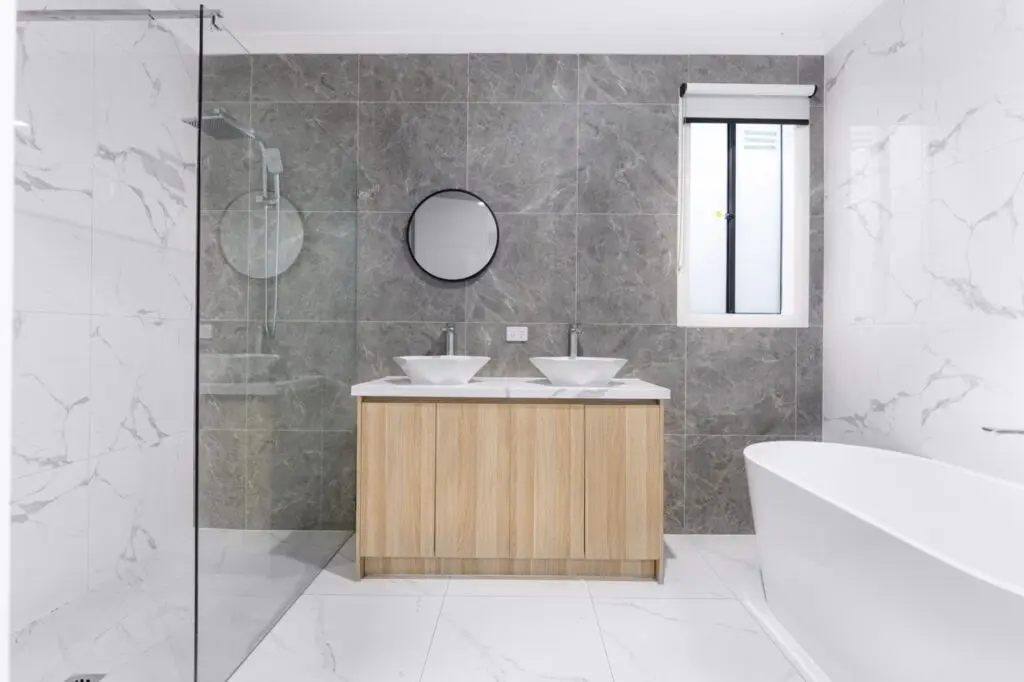
A water stain on the ceiling below the bathroom can ruin a perfectly good afternoon. Suddenly, you have to decide. Nobody wants to throw money at a room that keeps breaking, and nobody wants to tear out a room that only needed a new valve. That tension sits at the heart of the bathroom remodel vs. bathroom repair decision for many Lancaster homeowners, and the answer usually comes down to a simple rule.
Repair when the problem stays in one spot, and the room still works for you. Remodel when damage has spread into the floor or walls, the layout no longer fits your life, or you plan to sell and the room looks dated.
In this guide, you’ll learn which bathroom problems a simple repair can handle, which triggers usually point to a full remodel, and how leaks, accessibility needs, and resale plans change the math. You’ll also get a simple three-step plan to make the call with confidence.
Why the Remodel vs Repair Decision Feels So Hard
Most homeowners don’t struggle because they lack options. They struggle because they can’t see what’s behind the tile. A loose toilet could mean an inexpensive wax ring or a rotted subfloor. A dripping shower could need a cartridge or a whole new valve.
The villain here is guesswork. Without clear information, you either patch the same problem three times or spend more than you needed to. Neither feels right, and you shouldn’t have to gamble on your own home.
If you’ve stood in your bathroom wondering whether to call a plumber or a remodeler, you’re not alone. Groff’s Home Comfort Team has worked in Lancaster County bathrooms since 1987. That long view helps our plumbers tell you honestly which problems a repair will solve and which ones will keep coming back.
When a Bathroom Repair Is the Smart Choice
A repair makes sense when the problem is isolated, the damage hasn’t spread, and you still like how the room works. Here are the most common repair-level problems.
A drip, a running toilet, or a stuck valve
Worn cartridges, flappers, and fill valves fail with age. A plumber can usually replace them in one visit without touching your walls or floor.
A slow or clogged drain
Hair, soap, and mineral buildup cause most bathroom clogs. Lancaster County’s hard water speeds up that buildup. A cleaning fixes it, unless several drains slow down at once.
Cracked grout or failing caulk
Regrouting and resealing stop water before it reaches the wall behind your tile.
One worn-out fixture
A chipped sink or an old toilet doesn’t mean the whole room has to go. If the rest of the bathroom suits you, replace the one piece that doesn’t.
For problems like these, start with plumbing repairs. You keep your bathroom, and you stop the problem at its source.
When a Bathroom Remodel Makes More Sense
A remodel makes sense when the problem lives inside the walls and floors, or when the room no longer fits the way you live. Three triggers come up again and again.
Leaks that keep coming back
A recurring leak usually means the problem runs deeper than a single fixture.
Watch for these signs of hidden water damage:
- Soft or spongy flooring near the tub or toilet
- Loose tiles or tiles that sound hollow when you tap them
- Stains on the ceiling below the bathroom
- A musty smell that cleaning won’t fix
- Paint that bubbles or peels on nearby walls
Once water reaches the subfloor or wall framing, a surface repair only hides the damage. Opening the room lets you fix the cause and rebuild on solid ground. This happens often in older Lancaster homes, from city rowhomes to 1950s Cape Cods in Manheim Township, where original tile and piping have reached the end of their life.
Accessibility needs
The bathroom carries real risk as you age. The CDC found that emergency rooms treated an estimated 234,094 nonfatal bathroom injuries in 2008. Falls caused 81.1% of them, and injury rates climbed with age.
Grab bars alone can help. But if you or a parent struggles to step over a tub wall, a remodel with a curbless walk-in shower, a comfort-height toilet, and wider clearance lets you stay in the home you love.
Resale plans
If you plan to sell in the next few years, a dated bathroom can hold back your price. Be realistic about the return, though. The National Association of REALTORS® 2025 Remodeling Impact Report estimates a bathroom renovation recovers about 50% of its cost at resale. Remodel for the years you’ll use the room, and treat resale value as a bonus.
Bathroom Remodel vs Bathroom Repair: A Quick Decision Guide
Most bathrooms show clear signs that point one way or the other. Walk through your room and see which list sounds more familiar.
You can likely repair if:
- The leak comes from one fixture, and it’s the first time
- The damage stays on the surface, with a solid floor underneath
- The layout still works well for your household
- Only one or two fixtures are worn out
- You plan to stay, and the room still suits you
A remodel likely makes more sense if:
- Leaks keep coming back, or the floor feels soft
- Water has reached the subfloor or framing, or you see mold
- The room feels tight, unsafe, or hard to use
- Most of the fixtures are original to the house
- You plan to age in place or sell in the next few years
If most of your answers fall in the second list, a remodel will likely cost you less over time than a string of repairs.
What Putting Off the Decision Costs You
Waiting rarely makes a failing bathroom cheaper.
Here’s what you risk:
- Money: Hidden leaks spread into subfloors, joists, and the ceiling below.
- Health: Trapped moisture feeds mold and musty air.
- Safety: A high tub wall or slick floor keeps putting someone at risk of a fall.
- Peace of mind: You keep calling for the same repair and wondering when it will fail again.
What It Feels Like to Get It Right
Picture walking into a bathroom you don’t have to think about. The floor feels solid. The shower drains fast. Your parents step into a walk-in shower without reaching for the wall. You made the right call, at the right time, for the right reasons, and the room finally works for you instead of against you.
A Simple 3-Step Plan to Make the Call
You don’t have to figure this out alone or guess what’s behind the tile.
Step 1:
Note what’s happening. Write down the leaks, stains, smells, or safety worries you’ve noticed, and how long they’ve been going on.
Step 2:
Get an honest assessment. A licensed plumber checks the fixtures, floor, and plumbing, then tells you plainly whether a repair will hold up or a remodel makes more sense.
Step 3:
Choose the path that fits your plans. You get clear options before any work starts. Whether you repair or remodel, one locally owned team handles the plumbing, electrical, and finish work with top-quality materials and a 100% satisfaction guarantee.
Love Your Bathroom Again: Book Your Assessment Today
Get a clear, honest answer about your bathroom. Schedule service online or call (717) 464-9446 today.
If you’re still weighing your options, explore our bathroom remodeling services to see how a full project comes together, from new plumbing and lighting to the finished shower.
FAQs: Bathroom Remodel vs Bathroom Repair
How do I know if I need a bathroom remodel or just a repair?
Repair when the problem is limited to one fixture and the room still works for you. Remodel when damage reaches the floor or walls, leaks keep returning, or the layout no longer fits your needs.
Is it cheaper to repair or remodel a bathroom?
A single repair costs less up front. Repeated repairs on a failing bathroom can add up, and they don’t fix hidden damage.
What are signs of water damage behind bathroom tile?
Look for loose or hollow-sounding tiles, soft flooring, ceiling stains below the bathroom, peeling paint, and a musty smell.
Does a bathroom remodel increase home value?
It can help a home sell. NAR’s 2025 report estimates a bathroom renovation recovers about 50% of its cost at resale.
Can I make my bathroom safer without a full remodel?
Yes. Grab bars, non-slip surfaces, and a comfort-height toilet help. A full remodel makes sense when you need a walk-in shower or more space to move.
About the Author: Andrew Whittaker
Andrew Whittaker, co-owner of Groff’s Home Comfort Team, brings over a decade of dedicated leadership to one of Lancaster County’s most trusted home service companies. Since joining the team more than 10 years ago, Andrew has been instrumental in maintaining Groff’s reputation for quality craftsmanship, honest advice, and innovative solutions. With a mechanical engineering background and a passion for customer care, Andrew ensures every project meets the high standards that have defined Groff’s since 1987.
Andrew’s commitment to ongoing education and technical excellence keeps Groff’s at the forefront of home comfort technology. His hands-on approach and attention to detail ensure that every HVAC, plumbing, electrical, and water treatment project receives the expertise Lancaster County homeowners deserve, backed by our 100% satisfaction guarantee.
Beyond his professional achievements, Andrew is deeply invested in the Lancaster community. He supports local initiatives and fosters a company culture that values generosity, purpose, and lasting relationships. Under his leadership, Groff’s not only delivers exceptional home comfort solutions but also serves as a trusted neighbor dedicated to enhancing the comfort and safety of every home.
