
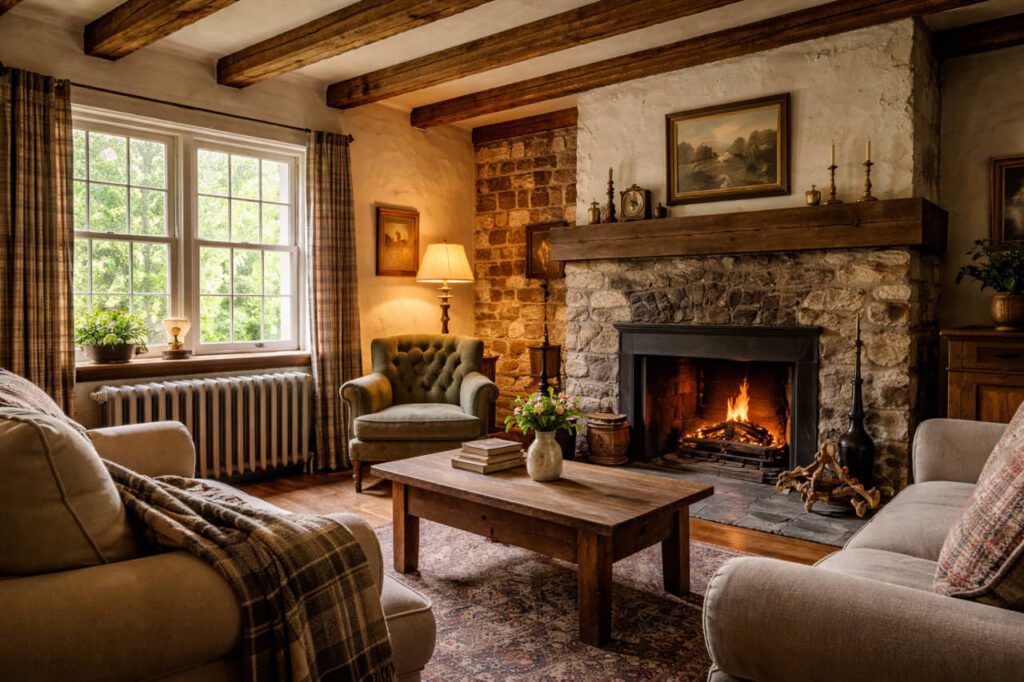
Walking into a pre-1950 home in Lancaster County feels like stepping through layers of history. The plaster walls hide horsehair and wooden lath. Radiators occupy corners where modern baseboard heat would never fit.
Knob-and-tube wiring snakes through walls built when electricity was still a luxury. These homes in Lancaster County tell stories through their construction details, their quirks, and the ingenious solutions craftsmen devised before building codes standardized everything. After nearly four decades servicing these properties, from Georgian stone houses built in the 1700s to Victorian row homes lining East King Street to Craftsman bungalows from the 1920s, we’ve learned that understanding these homes requires equal parts technical skill, historical knowledge, and creative problem-solving. Every service call becomes an exercise in detective work, where reading construction clues reveals how to modernize comfort systems without destroying the character that makes these houses worth preserving.
The Construction Methods That Define Pre-1950 Homes in Lancaster County
Homes built before 1950 in Lancaster County represent a fundamentally different construction philosophy than anything built afterward. These weren’t assembled from standardized components manufactured in distant factories. They were built by local craftsmen using regional materials and time-tested techniques passed down through generations.
Stone Construction: The Foundation of Lancaster’s Oldest Homes
Drive through rural Lancaster County, and you’ll pass stone farmhouses that predate the Revolutionary War. These structures used locally quarried limestone and sandstone, with walls measuring 18 to 24 inches thick. This thermal mass naturally moderates temperature swings.
The mortar tells its own story. Original lime mortar remains softer than modern Portland cement mixes, allowing walls to flex slightly without cracking. This flexibility matters when running new plumbing or electrical lines. Drill too aggressively, and entire sections crumble. With patience and the right techniques, these walls accept modern systems remarkably well.
Stone homes present unique HVAC challenges. Those thick walls weren’t designed for ductwork. Installing central air requires creative routing through interior walls, closets, or carefully planned chases. The reward? These homes maintain comfortable temperatures with less energy than their wall thickness might suggest.
Balloon Framing: The Hidden Architecture of Victorian Homes
Victorian-era homes throughout Lancaster’s neighborhoods use balloon framing, where long vertical studs run uninterrupted from foundation to roof. This creates continuous wall cavities that connect from floor to floor.
From a service perspective, balloon framing offers both opportunities and challenges. Running new wiring or plumbing vertically becomes straightforward since wall cavities connect between floors. However, air sealing these homes requires identifying and blocking numerous pathways that modern construction naturally eliminates. We’ve encountered Victorian homes where basement air freely circulates to attic spaces through these continuous cavities, undermining any HVAC improvements until properly addressed.
Plaster Over Lath: Walls Built to Last
Instead of half-inch drywall, pre-1950 homes feature three-coat plaster applied over wooden lath strips. The first coat squeezes through the lath gaps, creating mechanical keys that lock the plaster to the walls. This construction method affects every trade. Preserving historic mechanical systems and integrating modern ones requires understanding original construction to avoid permanent damage.
The horsehair mixed into the plaster serves as reinforcement, preventing cracks despite decades of building movement. We’ve opened walls in homes built in the 1870s to find plaster still firmly attached to lath, requiring careful removal and equally careful patching.
Plumbing Systems That Predate Modern Standards
Pre-1950 plumbing in Lancaster County homes ranges from ingenious to concerning. Some systems still function admirably after 80 years. Others present challenges that require thoughtful solutions, balancing preservation with safety.
Galvanized Steel and Cast Iron
Most homes built between 1900 and 1950 used galvanized steel for water supply lines. These pipes develop internal corrosion that gradually restricts flow. Eventually, shower pressure drops to a trickle when someone flushes a toilet. Replacing galvanized plumbing requires a strategy. Complete replacement often means opening walls throughout the house. Selective replacement targets the worst sections, buying time and budget for comprehensive updates later.
Cast iron drain lines often outlast everything else in the plumbing system. Properly installed cast iron lasts 80 to 100 years and dampens noise far better than modern PVC. Problems arise when rust perforates pipes from the inside out or tree roots infiltrate cracked joints.
Radiators and Steam Heat
Many pre-1950 homes in Lancaster County retain original radiator heating systems. Steam systems work on pressure differentials and gravity. Boilers create steam that rises through pipes to radiators. As steam condenses, it returns to the boiler by gravity. No pumps. No electricity. Simple and effective when properly maintained.
Converting these homes to forced-air heating requires deciding whether to keep radiators for supplemental heat or remove them entirely. Some homeowners cherish the character radiators provide. Others want them gone to free floor space.
Electrical Systems That Remember Different Times
Pre-1950 electrical systems in Lancaster County homes reflect an evolving understanding of electricity and changing household demands. Early systems powered lights and maybe a radio. By 1950, increasing appliance loads required more capacity.
Knob-and-Tube Wiring
Homes built before 1930 typically used knob-and-tube wiring. Ceramic knobs support wires away from framing. Ceramic tubes protect the wire where it passes through structural members. This method provided safe, effective electrical distribution for the limited loads typical when installed.
The problem isn’t the wiring itself when properly maintained. Issues arise when homeowners add insulation (which knob-and-tube requires air circulation to dissipate heat) or when decades of amateur modifications create dangerous conditions. Insurance companies often refuse coverage for homes with active knob-and-tube wiring.
Fuse Panels and Upgrades
Pre-1950 homes typically have 60-amp or 100-amp fuse panels. These systems worked well to meet the electrical demands of the 1940s. Modern households need 150 to 200 amps to handle air conditioning, electric ranges, multiple computers, and countless other loads.
Upgrading electrical service requires replacing panels, running new service lines from the utility, and often rewiring circuits to meet current code. According to the National Electrical Code, modern safety standards require GFCI protection in bathrooms and kitchens, AFCI protection in bedrooms, and proper grounding that early systems lacked.
The HVAC Challenge: Making Old Bones Comfortable
Installing modern HVAC in pre-1950 Lancaster County homes requires creative solutions. These houses weren’t designed for central air conditioning or forced-air heat. Finding ductwork routes, maintaining architectural character, and achieving comfortable temperatures demand experience with old-house quirks.
Where Ducts Go When There’s No Space
Colonial and Victorian floor plans include small, compartmentalized rooms, thick walls, and limited attic access. Finding paths for ductwork challenges is even experienced installers.
Solutions include:
- Building vertical duct runs through closets on each floor
- Creating enclosed soffits in kitchens, hallways, or bathrooms
- Running ductwork below floor joists where ceiling height permits
- Placing return grilles near ceilings to pull warm air from upper rooms
Each home presents unique opportunities and constraints. The key is balancing effective distribution with the preservation of character details that homeowners value.
Mini-Split Systems: Modern Comfort Without Ductwork
Ductless mini-split systems bypass many old-house challenges entirely. Small refrigerant lines run through walls, requiring only three-inch holes. Indoor units mount high on walls or are recessed in ceilings. No extensive ductwork. No major renovations.
We’ve installed mini-splits throughout Lancaster County’s historic districts, where running ducts would require destroying irreplaceable architectural features. These systems provide efficient heating and cooling while respecting the original construction.
The Craftsmanship Worth Preserving
Despite challenges, pre-1950 homes in Lancaster County offer quality construction that modern homes struggle to match. Old-growth lumber remains straight and strong. Hand-laid stone walls stand plumb after 200 years. Plaster finishes outlast drywall by generations.
Hardware tells stories. Brass doorknobs patinated by thousands of hands. Hand-forged hinges still swing smoothly. Built-in cabinetry crafted with joinery that predates power tools. These details make these homes special.
Since 1987, Groff’s Home Comfort Team has worked to honor this craftsmanship while updating comfort and safety systems. We’ve learned that successful projects respect original construction, use appropriate materials and techniques, and view these homes as partners in the work rather than obstacles to overcome.
Common Surprises in Pre-1950 Lancaster County Homes
Every old house reveals surprises. Some delightful, others challenging. Knowing what to expect helps homeowners and contractors plan effectively.
Unexpected finds include bricked-up fireplaces hidden behind plaster, cisterns in basements that once collected rainwater, original wallpaper layers beneath modern paint, 1920s-era newspaper insulation, handwritten notes from the original builders, and sawdust insulation in wall cavities. These discoveries add character and, occasionally, complicate the work.
Working With What You Have
The best approach to modernizing pre-1950 homes in Lancaster County balances necessary updates with thoughtful preservation. Not everything old needs replacement. Not every modern system fits appropriately.
Strategic improvements might include upgrading electrical service while maintaining period-appropriate fixtures in public spaces, installing efficient HVAC systems routed to minimize visual impact, replacing failed plumbing while preserving functional cast iron drains, and adding insulation without compromising vapor management in old wall assemblies.
These homes have survived decades or centuries. They’ll continue serving well with informed care that respects their construction while addressing modern needs.
Your Historic Home Deserves Expert Care
Pre-1950 homes in Lancaster County require specialized knowledge that comes from experience, not textbooks. Understanding how these houses were built, why they behave differently from modern construction, and how to integrate contemporary systems without destroying character takes time to develop.
Groff’s Home Comfort Team has spent nearly four decades learning these lessons while servicing Lancaster County’s historic housing stock. From Georgian stone houses to Victorian row homes to Craftsman bungalows, we’ve worked in the full range of pre-1950 construction. We use only top-quality materials appropriate for each home’s specific needs and back every project with our 100% satisfaction guarantee.
Whether you need HVAC solutions for a home without ductwork, electrical upgrades that respect plaster walls, or plumbing repairs in tight quarters, our locally owned team brings the knowledge and skills these projects demand.
Contact Groff’s Home Comfort Team at (717) 464-9446 to discuss the specific needs of your pre-1950 home. Visit our HVAC services page to learn how we approach comfort systems in historic properties. Discover how our comprehensive home services combine technical expertise with respect for Lancaster County’s architectural heritage.
Frequently Asked Questions
What are the most common problems in pre-1950 homes in Lancaster County?
Pre-1950 homes in Lancaster County typically face challenges with electrical, plumbing, and HVAC systems. Outdated knob-and-tube wiring or insufficient electrical service needs upgrading to meet modern demands. Galvanized steel pipes corrode internally, restricting water flow. Original systems lack air conditioning and ductwork needed for central cooling. Inadequate insulation in walls and attics increases heating costs. According to the National Park Service, integrating modern systems while preserving historic character requires specialized knowledge of original construction methods.
Can you add central air to a home built before 1950?
Yes, central air can be added to pre-1950 homes in Lancaster County, though installation requires creative solutions. Since these homes weren’t designed for ductwork, installers must find routes through closets, create bulkheads in hallways, or run ducts through basements. Ductless mini-split systems offer excellent alternatives, requiring only small refrigerant lines rather than extensive ductwork. Since 1987, Groff’s Home Comfort Team has successfully installed both traditional and ductless systems throughout Lancaster County’s historic homes.
Is knob-and-tube wiring dangerous?
Knob-and-tube wiring itself isn’t inherently dangerous when original and unmodified. Problems arise when homeowners add insulation, make amateur modifications, or overload circuits designed for smaller electrical demands. Most insurance companies refuse coverage for active knob-and-tube systems. Complete rewiring provides modern capacity, proper grounding, and safety features such as GFCI and AFCI protection, as required by current National Electrical Code standards. Professional assessment determines whether your specific system requires immediate replacement.
Should I replace original plaster walls with drywall?
Original plaster walls in pre-1950 Lancaster County homes typically outlast drywall and provide superior sound-dampening and fire resistance. Unless severely damaged, plaster should be preserved and repaired rather than replaced. Three-coat plaster over wooden lath creates harder, more durable surfaces than half-inch drywall. Professional plasterers can repair damage, and skilled contractors can run modern electrical and plumbing systems without destroying original finishes.
How do you install HVAC in a stone house with thick walls?
Stone houses common in Lancaster County require strategic HVAC planning, as 18- to 24-inch-thick walls make duct installation challenging. Solutions include running ductwork through interior walls and closets, creating chases between floors, routing ducts through basement ceilings, or installing ductless mini-split systems that bypass ductwork entirely. The thick stone walls actually provide thermal mass that moderates temperature swings, making these homes surprisingly efficient once properly sealed and insulated.
What makes pre-1950 homes in Lancaster County unique?
Pre-1950 homes in Lancaster County showcase construction methods and materials rarely seen in modern buildings. Stone houses use locally quarried limestone and sandstone in walls measuring up to 24 inches thick. Victorian homes feature balloon framing with continuous wall cavities. Three-coat plaster over wooden lath creates walls far more durable than drywall. Hand-hewn beams, old-growth lumber, cast iron radiators, and period hardware represent craftsmanship difficult to replicate today.
Should I hire specialists to work on my pre-1950 home?
Working on pre-1950 homes in Lancaster County requires understanding the historic construction methods, materials, and techniques that differ from those used in modern buildings. Contractors experienced with old houses recognize how balloon framing affects air sealing, why plaster walls need different approaches than drywall, and where modern systems integrate without destroying character. Since 1987, Groff’s Home Comfort Team has specialized in updating HVAC, plumbing, and electrical systems in historic homes throughout Lancaster County.
About the Author: Andrew Whittaker
Andrew Whittaker, owner of Groff’s Home Comfort Team, brings over 30 years of experience in HVAC, plumbing, electrical, and water treatment services. With a mechanical engineering background and a passion for customer care, Andrew has led Groff’s to become a trusted name in Lancaster County since 1987. His leadership emphasizes quality craftsmanship, honest advice, and innovative, tailored solutions for every home. Andrew’s commitment to ongoing education and active community involvement ensures Groff’s stays at the forefront of home comfort technology, backed by a 100% satisfaction guarantee.
Beyond his professional achievements, Andrew is deeply invested in the Lancaster community. He supports local initiatives and fosters a company culture that values generosity, purpose, and lasting relationships. Under his guidance, Groff’s not only delivers exceptional HVAC, electrical, and plumbing solutions but also serves as a trusted neighbor dedicated to enhancing the comfort and safety of every home.
