
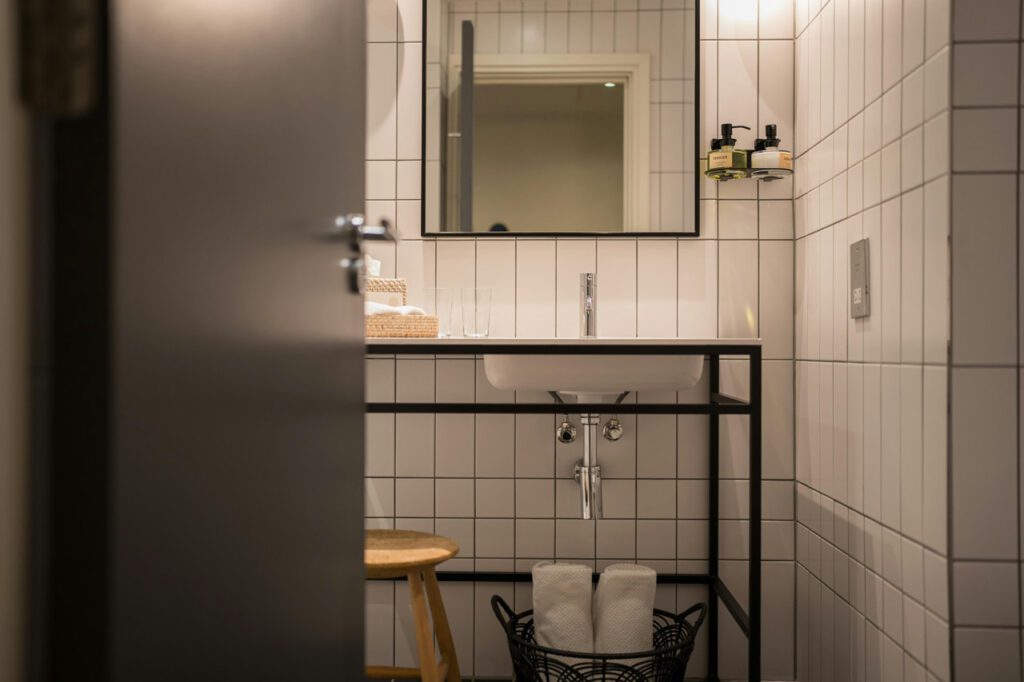
Bathroom remodeling represents one of the most significant investments Lancaster County homeowners make in their properties. Yet walking through new construction developments and recent flips reveals a troubling pattern: the same tired design choices appearing in bathroom after bathroom, many of which are already sliding toward irrelevance. The trends that dominated Pinterest boards and HGTV shows from 2021 to 2024 are rapidly giving way to something more nuanced.
Today’s homeowners increasingly favor what designers call “quiet luxury” and “wellness-driven design” over the flashy, matchy-matchy aesthetics that defined the early 2020s. Understanding these 7 outdated bathroom trends you should avoid can save you thousands in renovation costs while ensuring your bathroom remains stylish and functional for years to come.
1. The Stark Achromatic Palette
The Outdated Trend
All-white or high-contrast black-and-white bathrooms dominated design magazines for years. These achromatic spaces promised a clean, modern aesthetic that would never go out of style. The reality? They often feel cold, clinical, and sterile.
Why Is It Failing Now?
Pure white bathrooms show every speck of dirt, every water spot, and every discoloration. Grout lines darken. White fixtures turn yellow over time. The maintenance required to keep these spaces looking fresh quickly becomes exhausting. Beyond practicality, these stark palettes lack the warmth and personality today’s homeowners seek. The clinical feel that once signaled “modern” now reads as impersonal and unwelcoming.
The 2026 Alternative
Warm neutrals create sophisticated, livable spaces. Think mushroom gray, soft clay, warm terracotta, and creamy beige tones. These colors hide minor imperfections while providing visual interest through tonal layers. You’re creating depth and dimension rather than stark contrast. Natural stone in warmer tones, textured plaster finishes, and wood elements introduce organic warmth, making bathrooms feel like true retreat spaces.
Pro Tip
If you’re committed to lighter colors, choose materials with inherent texture and variation. Travertine, limestone, and textured porcelain tiles in warm tones provide visual interest while maintaining a bright, airy feel without the harsh maintenance demands of pure white.
2. Modern Farmhouse Overload
The Outdated Trend
White subway tile with dark grout. Shiplap walls. Black fixtures everywhere. The modern farmhouse aesthetic saturated the market so thoroughly that it became the default choice for budget flips and quick renovations throughout Lancaster County’s historic neighborhoods.
Why Is It Failing Now?
The modern farmhouse trend hit peak saturation. When every renovated bathroom, regardless of price point, looks identical, the style loses its appeal. More critically, many modern farmhouse elements feel forced in Lancaster’s genuinely historic homes. A Victorian row house or a Georgian farmhouse doesn’t need faux-rustic elements—it already has authentic character.
The 2026 Alternative
Hand-painted tiles like Zellige bring genuine artisan quality without the cookie-cutter feel. These Moroccan-style tiles feature subtle color variations and hand-formed edges, creating visual interest. Alternatively, consider vertically stacked tile layouts, herringbone patterns, or larger-format tiles in unexpected shapes. If your Lancaster County home has historic character, honor it rather than covering it with trendy elements that will date quickly.
Pro Tip
When choosing tile patterns, consider your home’s architecture. Colonial and Federal-style homes pair beautifully with classic patterns executed in contemporary materials. Victorian homes can handle more ornate choices. Let the architecture guide your design decisions.
3. Bulky Whirlpool and Jacuzzi Tubs
The Outdated Trend
Oversized whirlpool tubs with built-in jets promised spa-like luxury. In practice, most homeowners use them rarely, if ever. These fixtures occupy substantial floor space and require significant water to fill and extensive cleaning to maintain.
Why Is It Failing Now?
According to the National Kitchen and Bath Association, homeowners increasingly prioritize water conservation and easy maintenance. Whirlpool tubs contradict both goals. The jets harbor mold and bacteria. The water consumption feels wasteful. The space they occupy could serve more practical purposes. Many Lancaster County homeowners with older whirlpool tubs report using them once or twice before abandoning them completely.
The 2026 Alternative
Sculptural freestanding soaking tubs offer visual drama without the maintenance headaches. Modern designs feature clean lines and elegant forms that serve as focal points in the bathroom. Alternatively, many homeowners eliminate tubs entirely and expand walk-in showers with multiple shower heads, built-in seating, and luxurious finishes. If your family doesn’t use a tub regularly, the space becomes more valuable as an enhanced shower experience.
Pro Tip
Before committing to any tub, honestly assess your bathing habits. If you take fewer than one bath per month, the floor space is better used as an expanded shower area, additional storage, or simply as open space that makes the bathroom feel larger.
4. Matchy-Matchy Hardware
The Outdated Trend
All faucets, handles, towel bars, and light fixtures are in the same finish. This approach promised cohesion but often resulted in boring, overly coordinated spaces that felt more like showroom displays than lived-in bathrooms.
Why Is It Failing Now?
Real homes evolve over time. Accessories get replaced. Fixtures wear at different rates. The perfectly matched bathroom lacks the collected, curated feel that makes spaces interesting. Today’s design philosophy embraces intentional mixing of metals and finishes to create depth and visual interest.
The 2026 Alternative
Combine finishes thoughtfully. Pair brushed-brass faucets with matte-black hardware. Mix polished nickel towel bars with bronze light fixtures. The key is to select a dominant finish (use it for 60-70% of visible hardware) and an accent finish (the remaining 30-40%). This creates cohesion without monotony, suggesting the space evolved organically rather than being decorated in one go.
Pro Tip
When mixing metals, maintain a consistent temperature. Combine warm metals (brass, bronze, copper) together and cool metals (chrome, nickel, stainless) together. Matte black works as a neutral that bridges warm and cool successfully.
5. Standard Overhead Lighting
The Outdated Trend
Single-source ceiling fixtures, often referred to as “boob lights” for their unfortunate shape, provided basic illumination while creating harsh shadows exactly where you need good light most: at the mirror.
Why Is It Failing Now?
Bathroom tasks require different lighting for different purposes. Overhead fixtures can’t simultaneously provide bright task lighting at mirrors, ambient lighting for relaxation, and accent lighting to highlight architectural features. Poor lighting makes applying makeup difficult, creates unflattering shadows, and contributes to the clinical feel many homeowners want to avoid.
The 2026 Alternative
Layered lighting transforms bathroom functionality and ambiance. Install sconces flanking mirrors at eye level to eliminate shadows. Add dimmable LED strips behind mirrors for soft, even illumination. Install recessed ceiling lights on separate circuits to adjust brightness based on activity. Consider toe-kick lighting for nighttime navigation without harsh overhead glare.
Pro Tip
According to Energy Star guidelines, bathroom lighting should provide 70-80 foot-candles at the mirror for grooming tasks. Use warm white LEDs (2700-3000K) rather than cool white, which can emphasize skin imperfections and create an unflattering, institutional feel.
6. Faux Wood Tile Everywhere
The Outdated Trend
Ceramic or porcelain tile designed to mimic wood planks appeared in countless bathrooms. While water-resistant and durable, these products are never quite convincing. The pattern repetition gives them away. The feeling underfoot isn’t wood. The visual texture doesn’t match the physical texture.
Why Is It Failing Now?
If you want wood, use actual wood in moisture-protected applications. If you want tile, embrace what tile does well: stone-like textures, interesting patterns, and honest materiality. Faux finishes that try too hard to impersonate other materials always feel like compromises.
The 2026 Alternative
Natural stone brings authentic texture and variation. Travertine, limestone, and marble create sophisticated surfaces that age gracefully. Fluted or textured limestone adds dimensional interest. If the budget allows, use actual wood for vanities and treat them properly for bathroom humidity. When selecting tile, choose designs that celebrate what tile does uniquely rather than attempting to fake other materials.
Pro Tip
If wood aesthetic remains important, consider wider-plank luxury vinyl that genuinely mimics wood’s appearance and feel. Modern luxury vinyl products have improved dramatically, offering realistic wood visuals with complete water resistance at reasonable price points.
7. Over-the-Counter Vessel Sinks
The Outdated Trend
Bowl-style sinks that sit atop bathroom counters promised designer flair. They delivered awkward heights, splashing issues, and reduced counter space. What looked dramatic in hotel bathrooms caused daily frustration at home.
Why Is It Failing Now?
Vessel sinks require higher faucets, which increase splashing. They occupy valuable counter space. The seam where the sink meets the counter collects grime and requires constant cleaning. Many homeowners report that novelty wears off quickly while practical problems persist indefinitely.
The 2026 Alternative
Integrated stone basins provide seamless, sculptural beauty without practical drawbacks. These sinks form a single continuous piece with the countertops, eliminating seams and creating easy-to-clean surfaces. Undermount sinks offer similar benefits while providing greater material flexibility. Both options maximize usable counter space while delivering clean, contemporary aesthetics.
Pro Tip
For truly distinctive design, consider trough-style undermount sinks in primary bathrooms with two users. These elongated basins provide ample space for simultaneous use while maintaining the clean lines and ease of maintenance of integrated designs.
How to Spot a Fading Trend?
Not every trendy choice deserves avoidance. Some trends represent genuine improvements in function or aesthetics.
How do you distinguish timeless from temporary?
Apply these filters:
The flip house test: If you see a design choice in every quickly renovated property, it’s already approaching oversaturation. Builders and flippers chase recent trends, meaning by the time something dominates that market, it’s peaked.
The Instagram test: When a specific hashtag or aesthetic reaches millions of posts, the trend has saturated. A unique design cannot be infinitely replicated without losing its appeal.
The maintenance test: Trends that ignore practical maintenance typically fade fast. Beautiful choices that become burdens don’t last.
The architecture test: Design choices that ignore your home’s existing character usually feel forced. Authentic renovations respect architectural context.
Timeless Bathroom Design Principles
While specific trends come and go, certain principles remain constant. Quality materials age better than trendy finishes. Proper lighting serves function first, ambiance second. Adequate ventilation protects your investment. Storage that serves actual needs beats decorative storage every time.
Since 1987, Groff’s Home Comfort Team has helped Lancaster County homeowners navigate bathroom renovations, from historic Victorians to modern construction. Our experience shows that the most successful bathrooms balance current design with timeless functionality. We’ve seen trends come and go, but the fundamentals remain: proper planning, quality materials, and expert installation matter more than following whatever Pinterest currently features.
Your Bathroom Remodel Deserves Better
Avoiding outdated bathroom trends isn’t about chasing the latest trend. It’s about making intentional choices that serve your daily life while maintaining value over time. The bathroom trends of 2026 emphasize natural materials, thoughtful lighting, and authentic design over Instagram-ready but impractical choices.
When planning your Lancaster County bathroom renovation, consider how design choices serve actual function. Will this fixture work well in five years? Does this finish suit your home’s character? Can you maintain this surface realistically? These questions guide better decisions than trend forecasts ever could.
Groff’s Home Comfort Team brings decades of bathroom remodelling experience to homeowners in Lancaster, PA. Our comprehensive approach handles plumbing, electrical, and finishing work, ensuring your renovation reflects both current design sensibility and lasting functionality. We use only top-quality materials and stand behind every project with our 100% satisfaction guarantee.
Ready to avoid these 7 outdated bathroom trends and create a space you’ll love for years? Contact Groff’s Home Comfort Team at (717) 455-3478 or visit our bathroom remodeling services page to schedule your consultation.
Discover how professional planning and expert execution create bathrooms that stand the test of time. Learn more about our comprehensive home services and experience the difference that locally owned, quality-focused craftsmanship makes.
Frequently Asked Questions
What bathroom trends should I avoid in 2026?
The 7 outdated bathroom trends you should avoid include stark all-white or high-contrast black-and-white colour schemes; oversaturated modern farmhouse elements such as white subway tile with dark grout; bulky whirlpool tubs; matchy-matchy hardware in single finishes; standard overhead “boob” lighting; faux wood tile; and over-the-counter vessel sinks. These trends are being replaced by warm neutrals, artisan tiles, sculptural soaking tubs, mixed metal finishes, layered lighting, natural stone, and integrated basins that prioritize both aesthetics and functionality.
How do I create a timeless bathroom design?
Timeless bathroom design focuses on high-quality materials, proper functionality, and respect for your home’s architectural character. Choose neutral, warm tones over stark contrasts. Invest in proper layered lighting rather than single-source fixtures. Select materials such as natural stone, high-quality tile, and solid wood that age gracefully. Prioritize practical features like adequate storage, proper ventilation, and easy-to-maintain surfaces. Avoid trendy elements that ignore Lancaster County’s historic home styles, and remember that authentic design appropriate to your home’s architecture always outlasts temporary trends.
Are white bathrooms still in style?
Pure white bathrooms are falling out of favor, with warmer, more livable neutral palettes gaining traction. While white remains part of bathroom design, the stark all-white aesthetic creates maintenance challenges and feels overly clinical. The 2026 approach embraces warm whites, creams, mushroom grays, and clay tones, providing visual interest through tonal layers. These colors hide minor imperfections better than pure white while creating sophisticated, welcoming spaces that feel current without chasing trends.
Should I choose a tub or a shower for my bathroom remodel?
This decision depends entirely on your actual bathing habits. According to the National Kitchen and Bath Association, most homeowners rarely use tubs, especially bulky whirlpool models. If you take fewer than 1 bath per month, your space is better served by an expanded luxury shower with multiple heads, built-in seating, and high-quality finishes. However, if you genuinely use tubs regularly or have young children, a sculptural freestanding soaking tub provides both function and visual appeal without the maintenance demands of jetted models.
What are the best materials for bathroom remodels?
The best bathroom remodel materials balance durability, aesthetics, and maintenance requirements. Natural stone, like travertine, limestone, and marble, creates sophisticated surfaces that improve with age. Large-format porcelain tiles reduce grout lines and maintenance. Quartz countertops offer the aesthetics of stone with superior durability and stain resistance. For flooring, heated tile transforms functionality while providing visual appeal. Avoid faux finishes that try to mimic other materials; instead, choose honest materials that celebrate their inherent qualities. Quality materials cost more initially but deliver better long-term value through durability and timeless appeal.
How can I tell if a bathroom trend will last?
Test potential trends against several filters before committing. If you see the design choice in every quickly renovated flip house, it’s likely already oversaturated. If a specific aesthetic dominates social media with millions of identical posts, uniqueness is lost. If the choice ignores practical maintenance requirements, it won’t last. If it clashes with your home’s architectural character rather than complementing it, the trend will feel forced. Lasting design respects context, prioritizes function, and uses quality materials that age gracefully rather than chasing whatever’s currently popular.
Why should I hire professionals for bathroom remodeling in Lancaster, PA?
Professional bathroom remodeling ensures proper plumbing, electrical, and finishing work that protects your investment. Bathrooms combine multiple trades requiring specific expertise. Licensed plumbers ensure code-compliant water supply and drainage. Licensed electricians handle GFCI outlets, proper lighting circuits, and ventilation fans safely. Experienced professionals understand Lancaster County’s historic homes and how to renovate them appropriately. Since 1987, Groff’s Home Comfort Team has helped local homeowners navigate bathroom renovations with comprehensive services that handle every aspect from design through completion, using only top-quality materials backed by 100% satisfaction guarantee.
About the Author: Andrew Whittaker
Andrew Whittaker, owner of Groff’s Home Comfort Team, brings over 30 years of experience in HVAC, plumbing, electrical, and water treatment services. With a mechanical engineering background and a passion for customer care, Andrew has led Groff’s to become a trusted name in Lancaster County since 1987. His leadership emphasizes quality craftsmanship, honest advice, and innovative, tailored solutions for every home. Andrew’s commitment to ongoing education and active community involvement ensures Groff’s stays at the forefront of home comfort technology, backed by a 100% satisfaction guarantee.
Beyond his professional achievements, Andrew is deeply invested in the Lancaster community. He supports local initiatives and fosters a company culture that values generosity, purpose, and lasting relationships. Under his guidance, Groff’s not only delivers exceptional HVAC, electrical, and plumbing solutions but also serves as a trusted neighbor dedicated to enhancing the comfort and safety of every home.
